
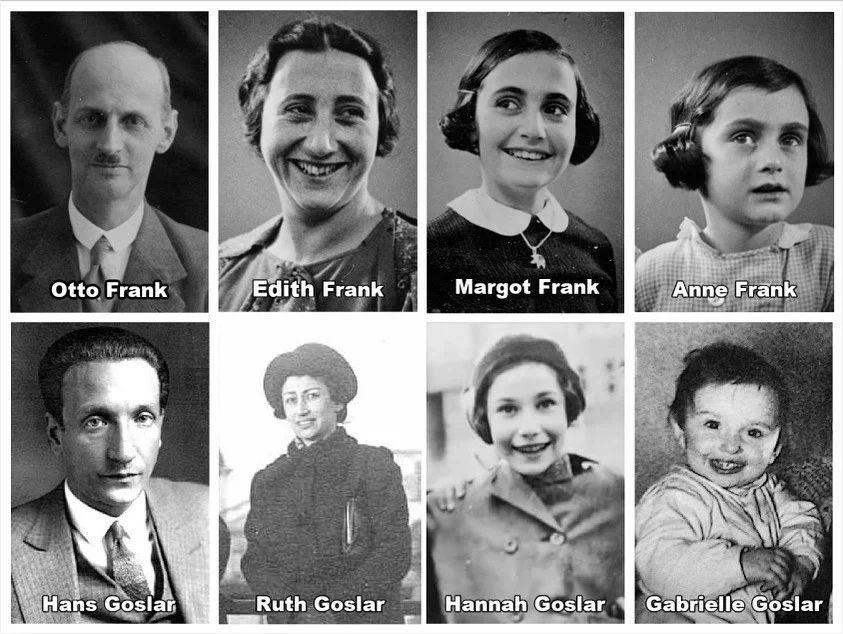
The tale of Gabi Goslar is a poignant reminder of the countless quiet lives affected by the Holocaust. While Anne Frank’s diary has shaped much of our understanding of this tragic era, Gabi Goslar’s story offers a unique perspective on survival and endurance. This article delves into her life, shedding light on a narrative that deserves recognition in its own right.
The Early Years Of Gabi Goslar
Gabi Goslar was born on October 25, 1940, in Amsterdam. Her full name, Rachel Gabriele Ida Goslar, reflects her Jewish heritage. The Goslar family, originally from Germany, fled to the Netherlands in the 1930s, hoping for safety from the rising tide of Nazi persecution. Gabi’s early years were marked by the shadow of impending danger as the Nazi occupation intensified.
A Family Torn Apart
Tragedy struck in 1942 when Gabi’s mother, Ruth Judith Goslar-Klee, died during childbirth. This loss left a profound impact on the family, especially on Gabi’s older sister, Hannah Pick-Goslar, who was already forming a close friendship with Anne Frank. The family’s situation grew increasingly precarious as anti-Jewish measures escalated, culminating in their arrest in 1943.
Review The Reason Behind The Separation Of Tea Leoni And Tim Daly
Life In The Camps
The Goslar family was first sent to Westerbork transit camp before being deported to the infamous Bergen-Belsen concentration camp. For young Gabi, this marked the beginning of a harrowing chapter. Bergen-Belsen, though not an extermination camp, was notorious for its brutal conditions, rampant disease, and starvation. Gabi’s survival depended heavily on her sister Hannah’s care and resourcefulness.
A Brief Reunion And Evacuation
In the chaos of Bergen-Belsen, Hannah managed to reunite briefly with Anne Frank, separated by a fence. This poignant encounter underscored the harsh realities faced by those within the camps. As the war neared its end, the Nazis began evacuating prisoners, including Gabi and Hannah, onto trains in what became known as the “Lost Train.”
After The War – A Life Of Privacy
Following liberation, Hannah became a key witness to Anne Frank’s final months, sharing their shared experiences with the world. In contrast, Gabi chose a path of privacy. Archival records suggest she eventually immigrated to Israel, embracing a life away from the public eye. This choice highlights the diverse ways survivors sought healing and normalcy after the war.
Gabi Goslar – A Quiet Legacy
Gabi Goslar’s story is not one of public speeches or diaries, but it is no less significant. Her life reminds us of the countless others who survived the Holocaust without becoming symbols. Her journey emphasizes the importance of family bonds, resilience, and the quiet strength required to endure unimaginable hardships.
Key Aspects Of Gabi Goslar’s Life
| Aspect | Details |
| Birth | October 25, 1940, Amsterdam |
| Family | German-Jewish refugees in Netherlands |
| Key Event | Arrest and deportation in 1943 |
| Survival | Dependent on sister Hannah’s care |
| Post-War | Immigrated to Israel, lived privately |
Conclusion
Gabi Goslar’s life is a testament to the silent endurance of those who survived the Holocaust. While she may not have penned a diary or spoken extensively in public, her story enriches our understanding of this dark chapter in history. Remembering Gabi Goslar honors the resilience and courage of all who lived through the Holocaust’s horrors without public recognition.
FAQs
1: Who was Gabi Goslar?
A: Gabi Goslar was a Holocaust survivor born in Amsterdam in 1940, known for her quiet life and survival through the Bergen-Belsen concentration camp.
2: How is Gabi Goslar related to Anne Frank?
A: Gabi was the younger sister of Hannah Pick-Goslar, Anne Frank’s close friend and fellow Holocaust survivor.
3: What happened to Gabi after the war?
A: Gabi Goslar immigrated to Israel, choosing a private life away from the public spotlight.
4: Why is Gabi Goslar’s story important?
A: Her story highlights the resilience of countless Holocaust survivors whose lives were marked by trauma and survival, without becoming public symbols.